Exploring Chicago: Science and Sightseeing at ACS

The ACS holds its national meetings every fall and spring. The spring meeting is usually in mid-to-late March. This fall, it was held in Chicago. Next spring, it’ll be in New Orleans, and I’ll without a doubt be there for that. New Orleans is one of my favorite US cities. The meetings usually rotate amongst major US cities. The current roster includes locations on the west coast (Anaheim, San Francisco, San Diego), the west/midwest (Denver, Chicago, Indianapolis), South (Houston, Dallas, San Antonio, New Orleans), and east coast (Boston, Washington, Philly, Orlando). Typical meeting attendance is around 14,000 scientists who come from all over the world. About 15% of meeting attendees are undergraduate students.

I attended the meeting as an invited lecturer. I also brought four UVU students from my group who gave presentations. A few years ago I applied for and received a research grant. from an organization called Organic Syntheses. They publish a journal of the same name, which is regarded as the gold-standard methods journal in synthetic organic chemistry. Synthetic organic chemistry is a field of science where people build molecules made principally of carbon, hydrogen, nitrogen, and oxygen. As a past grant recipient, I was invited to give a 30-minute talk in a symposium titled Scientific Advances in Organic Synthesis from Primarily Undergraduate Institutions. A primarily undergraduate institution is one that does not offer Ph.D. degrees. My talk was titled, “Total Synthesis of Marine Natural Products with HaloGenZ.” My attempt at humor involves the play-on-words of HaloGenZ. I work with exclusively Gen Z students, so Halo-Gen-Z, but if you say the word like it sounds it just says “halogens.” The compounds we make all have halogens in them. Corny, right?

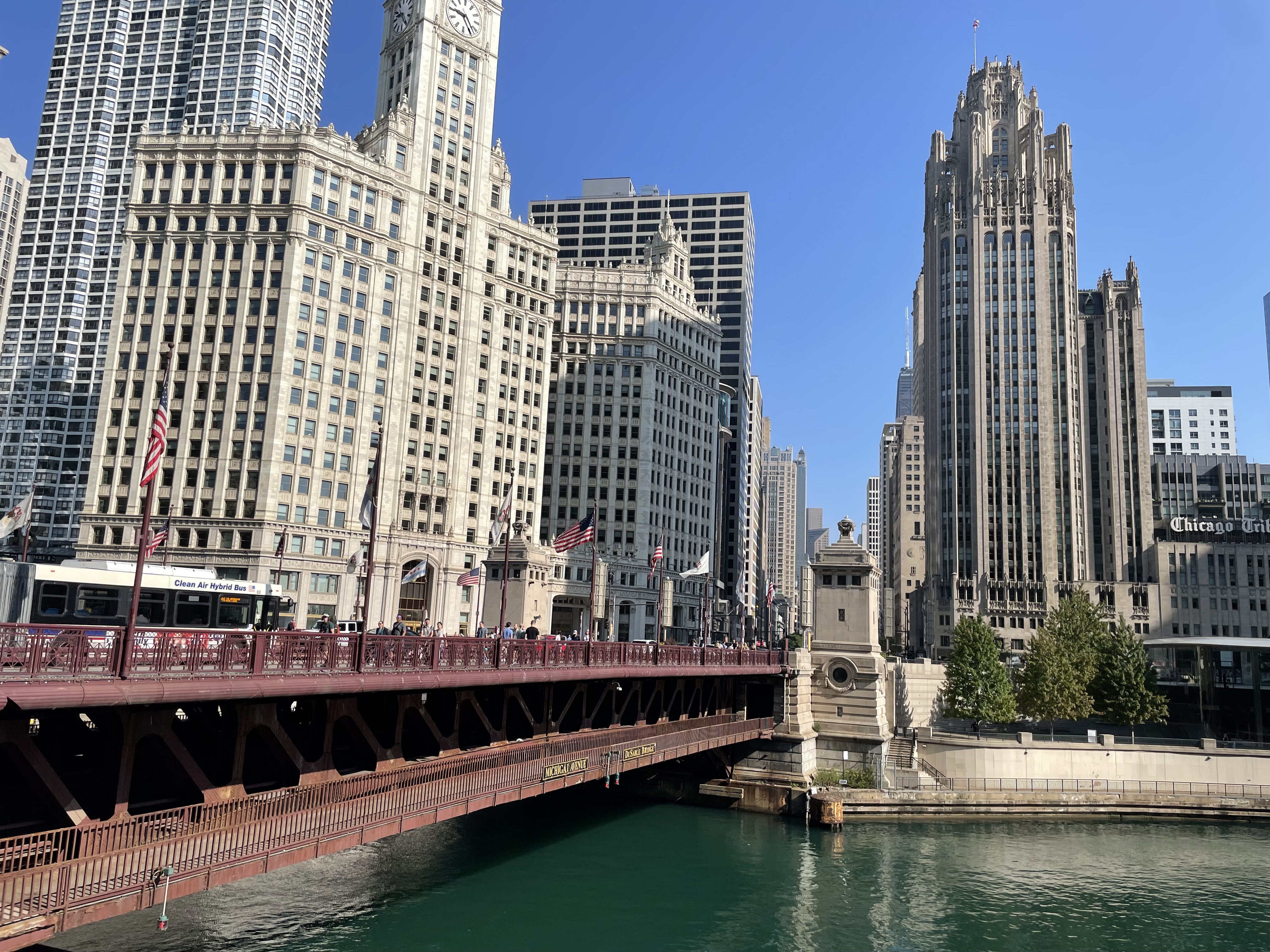
I always like to arrive the evening before everything starts up just so I can get settled, and, in this case, have extra time to practice my talk. On Sunday morning, the first full day, I walked around a bit to find a nice place for breakfast and took some photos. The Chicago skyline has a lot of newer glass and steel buildings, but I prefer Gothic and art-deco style buildings from the 1920s and 1930s. The Chicago Tribune building, finished in 1927, is my favorite. That’s the building on the right in the image below. The Chicago River also passes through downtown, evidenced by many walk/drive bridges, one of which is visible here. Then I practiced my talk a few times before my students arrived.
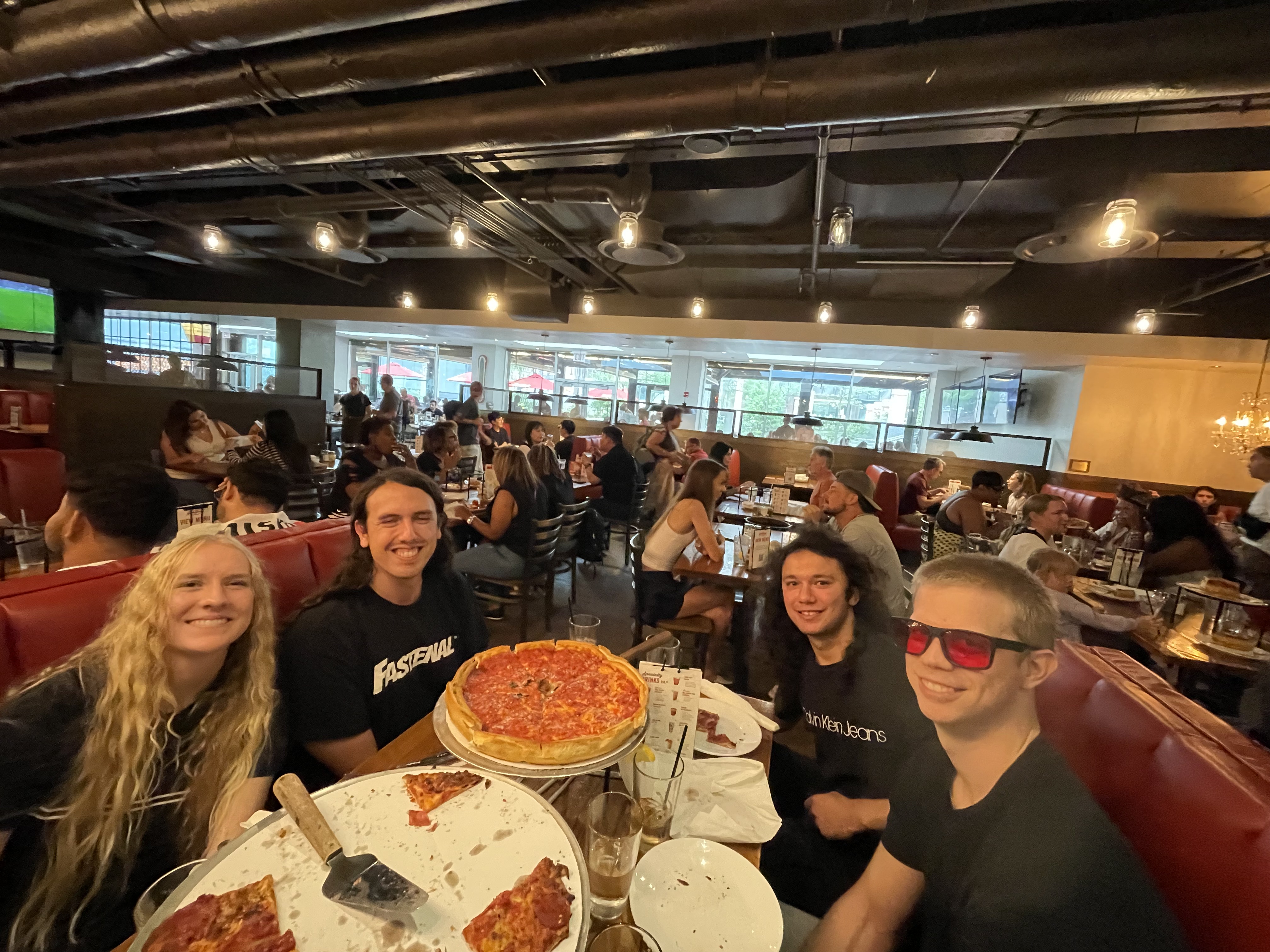
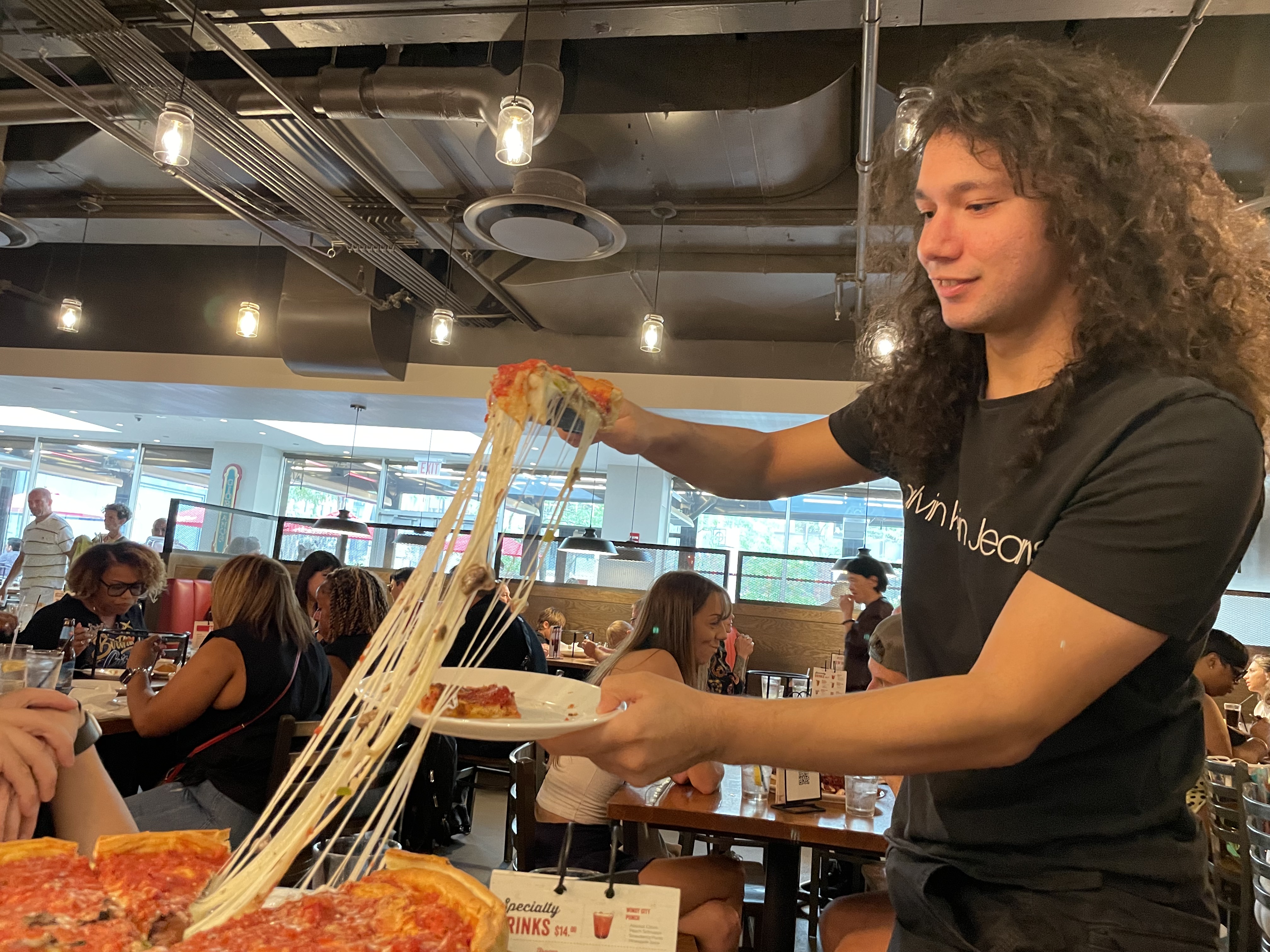
Once the students got there, I got them checked into the hotel and we went for lunch at the world-famous pizza restaurant, Giordano’s. Chicago is known for its tavern-style pizza and its deep-dish pizza. You can see both in the following picture. Nick demonstrates the signature cheese pull.
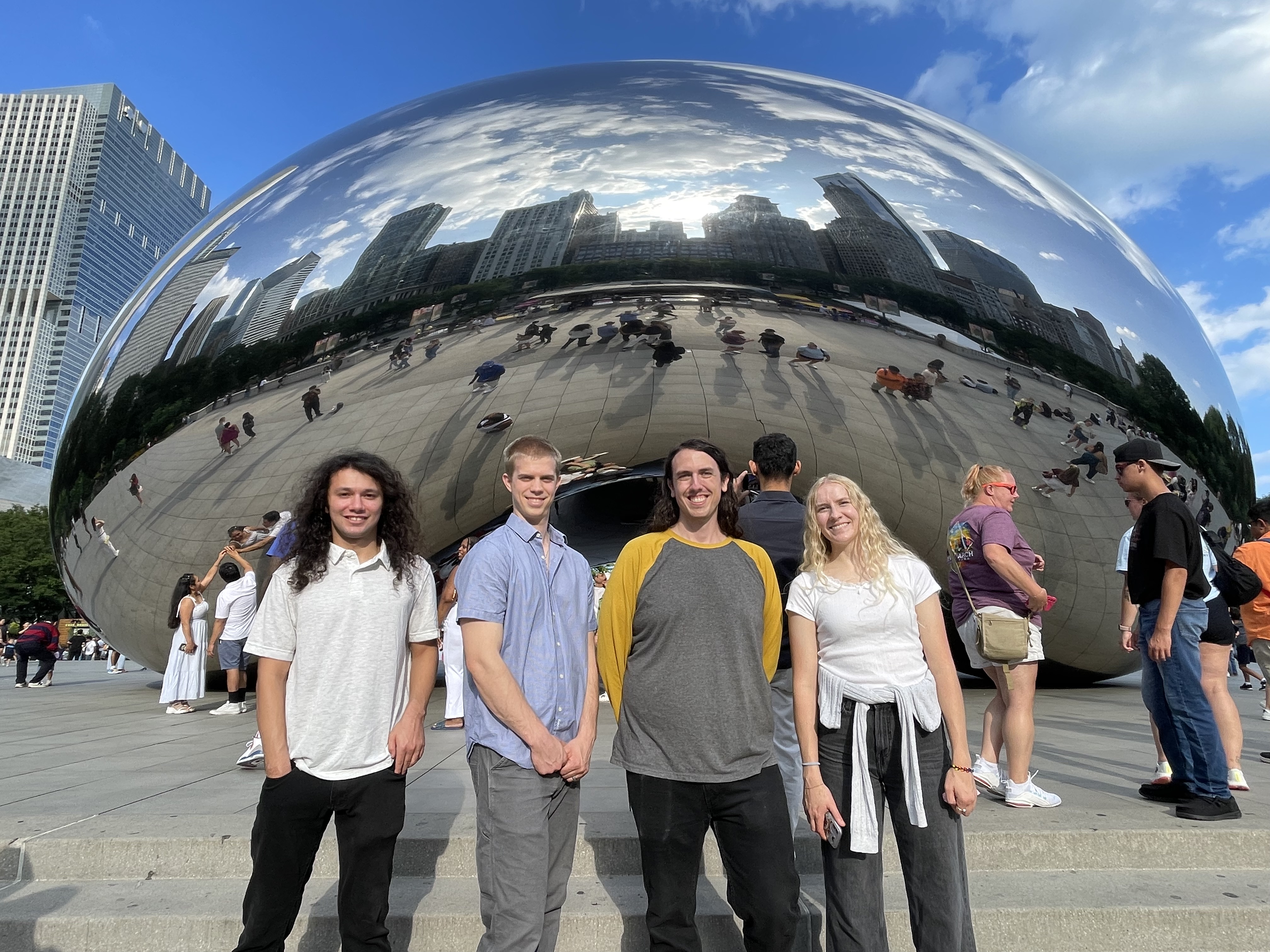
Later that afternoon, we explored Millennium Park and posed by the famous “Bean” for a group photo. An astute art aficionado, Ali pointed out that the sculpture’s official name is Cloud Gate.

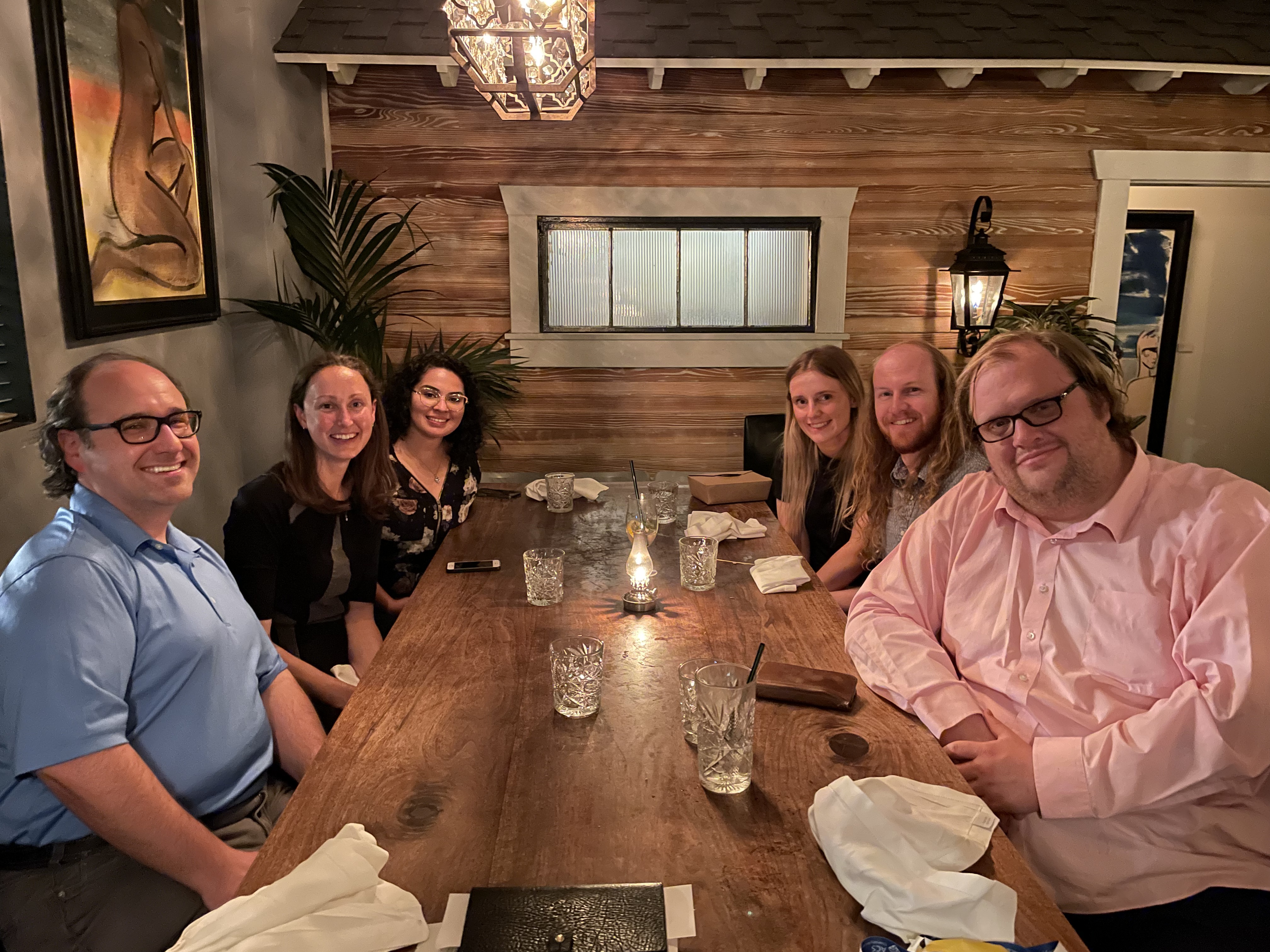
I was then off to a dinner with the other invited speakers in my symposium, but was surprised by many A-list organic chemists who were also in attendance. It was a pretty intimidating atmosphere. That lasted from 6:30 until after 10.

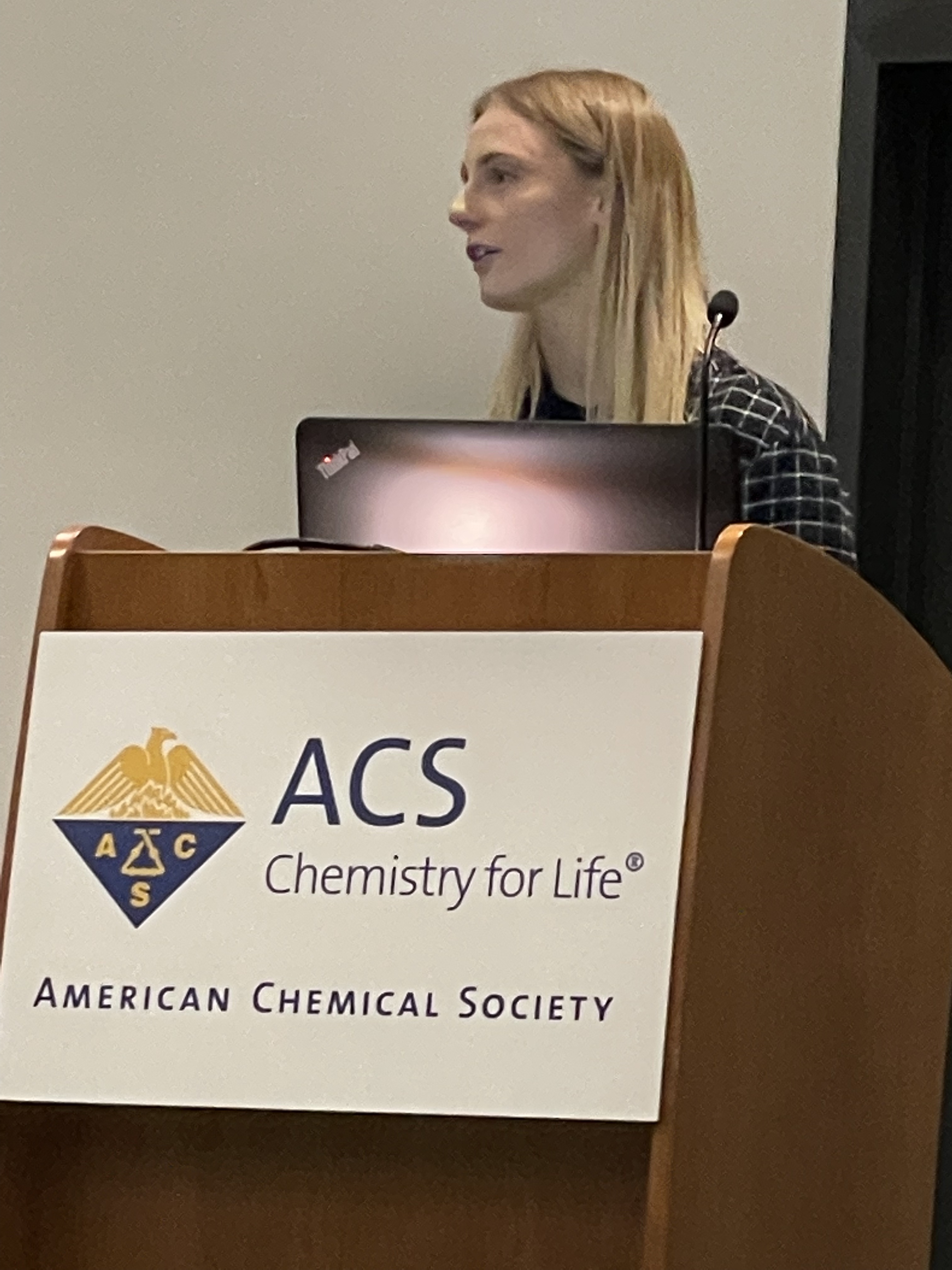
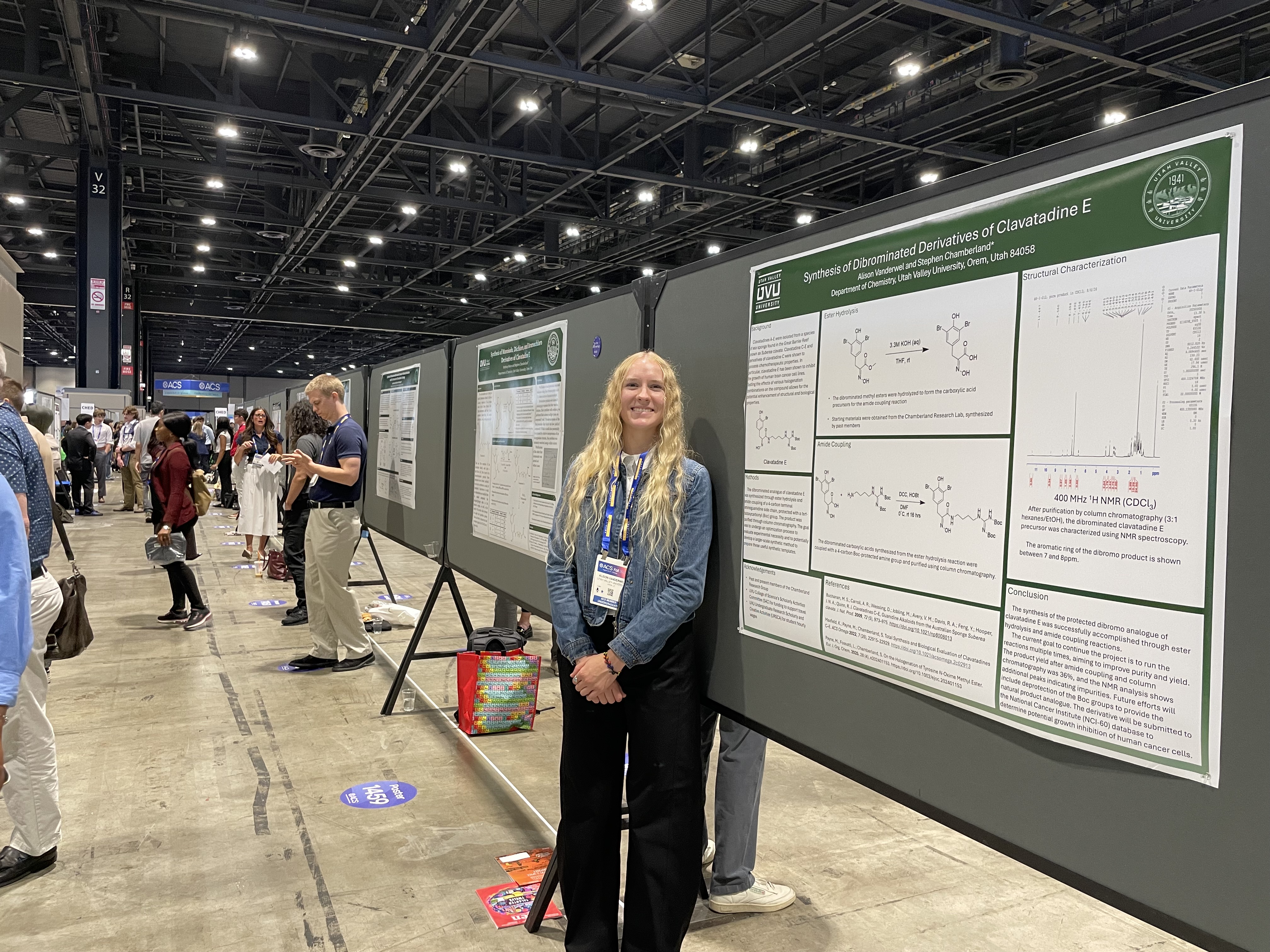
On Monday morning, we went to the conference center early and attended some talks. The students also went to the Graduate Student Fair and the Career Fair, while I practiced my talk more. My students’ presentations were from 12-2pm. In the foreground is Ali, and behind her are Luke and Nick. You get a sense of the size of the room. It’s held in an enormous ballroom where they can fit hundreds of posters at the same time. Just rows and rows of them. We also caught up with UVU’s very own Dr. Lakshmi Viswanath. She brought her research student, Gabriel, who presented a poster at the same session. We all visited his poster and gave him some support. The symposium where I spoke lasted from 2-6pm, then we all went to grab a bite at a nice sandwich shop before the evening poster session, known as Sci-Mix, began. That lasted from 8-10pm. 
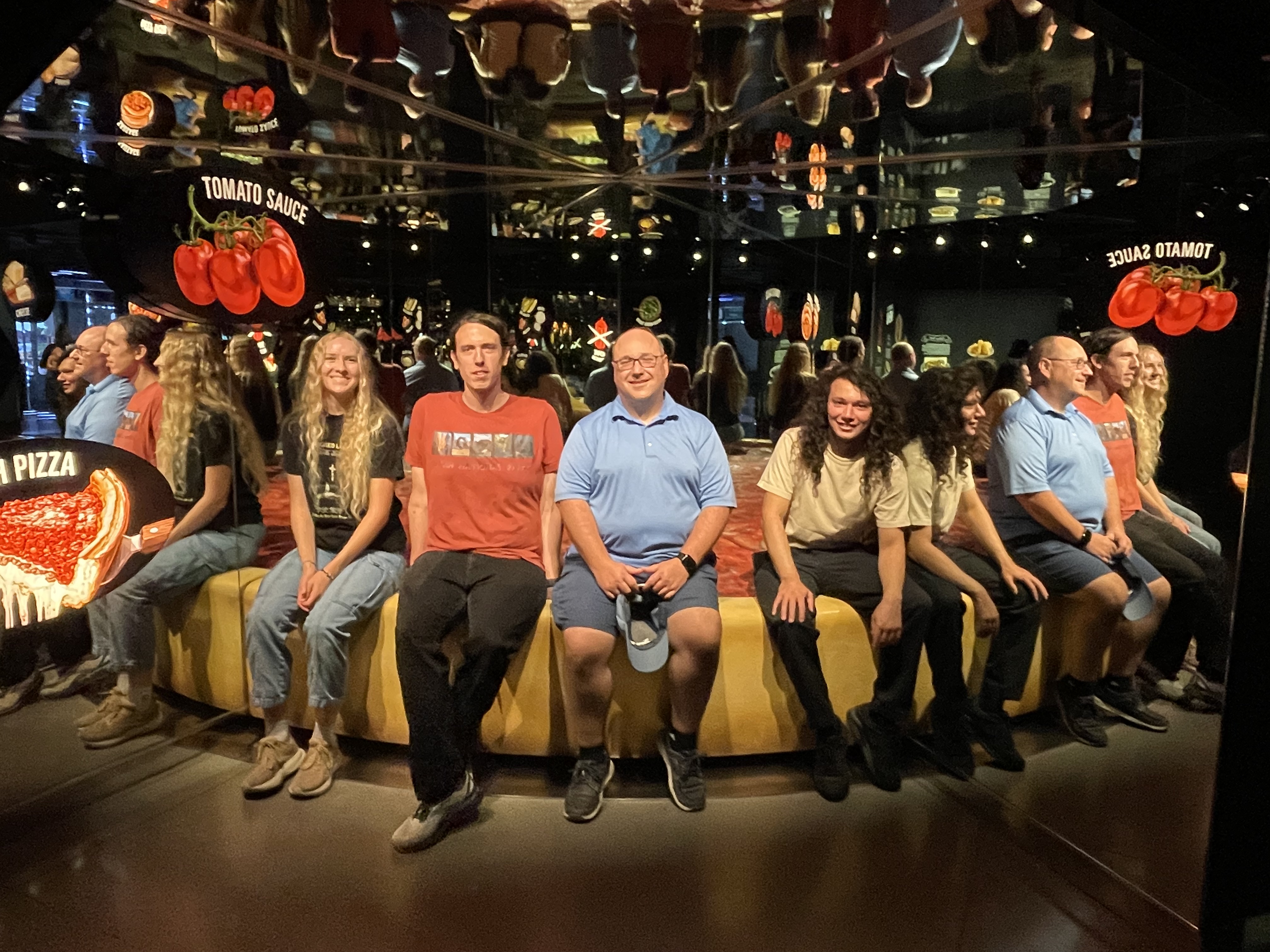
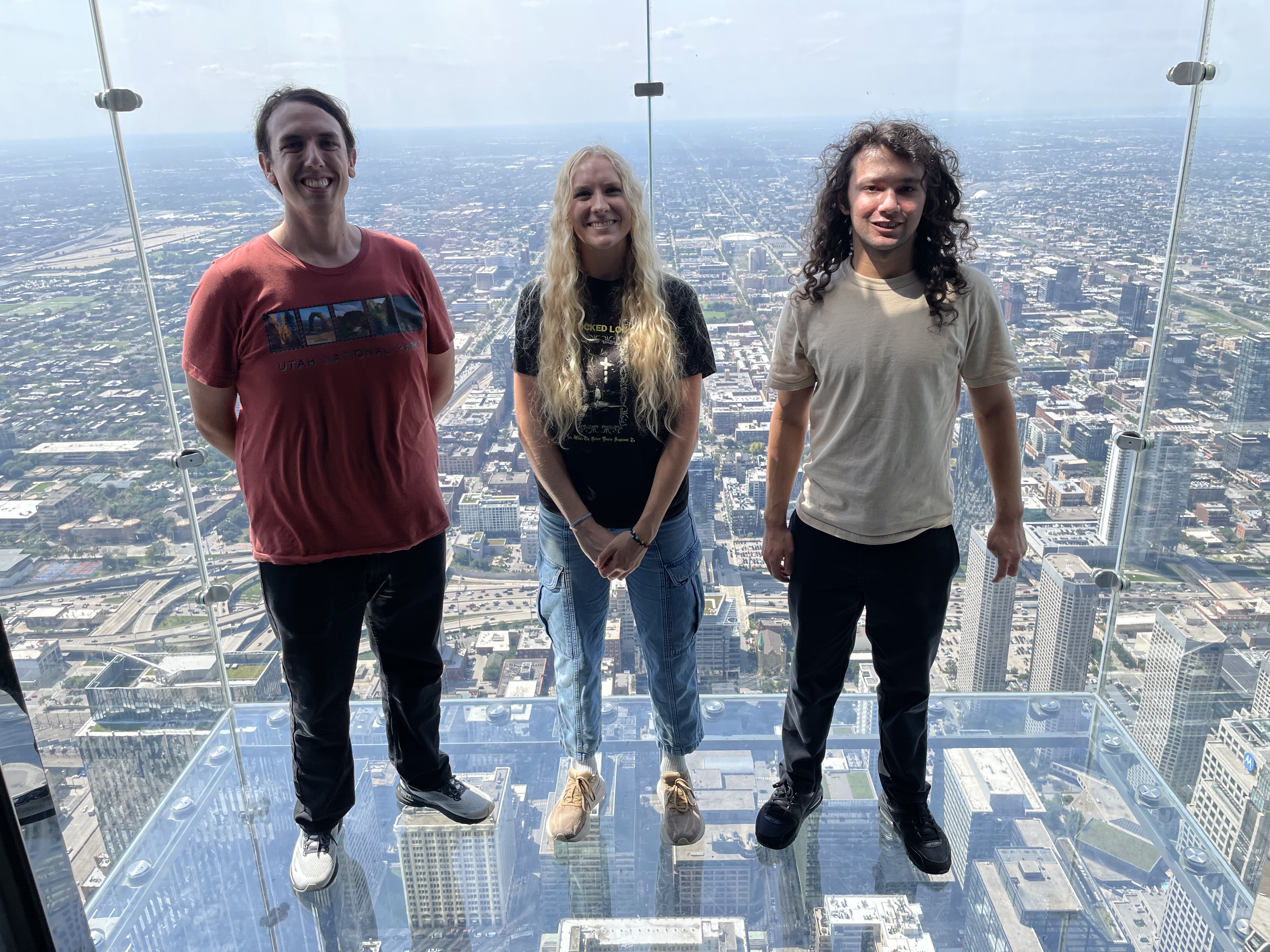
On the final full day, Tuesday, we did some sightseeing and team-building together and separately. Ali, Nick, and another member of my group, Anthony (red) visited the Willis Tower, which is the tallest building in Chicago. In the first pic we’re sitting on a deep-dish pizza seat, and the next one is from 1353 feet on the 103rd floor observation deck. Luke, who sojourned on his own, later said he walked over 26,000 steps that day. The next day, Wednesday, was our travel day back to Utah. We were all on the same flight and had a fun experience taking the “L” train together from downtown to the airport. Almost their entire trip was paid for by the UVU College of Science (COS), which offers dissemination grants to active COS majors. These four students have been in my group now for over two years and did a lot of work leading up to their presentations. I traditionally don’t consider pre-professional (med, dent, etc.) students or students majoring in Health Sciences for my research group, but I got really lucky with Ali, who’s a pre-med student.
2022 Biennial Conference on Chemistry Education (BCCE)

Greetings readers,

Wow, what a conference! Because COVID forced the organizing committee to cancel the 2020 meeting, this is the first BCCE held since we met at the University of Notre Dame in 2018. Yet we found ourselves back in the sweltering summer humidity of Indiana, this time at Purdue University.

Because the conference welcomes chemistry instructors from all types of colleges as well as high school, one will get the most out of their experience if they attend the conference with a specific focus. I had two, and I also gave a talk that described my approach to diversity and inclusion. My first objective was to learn how to evaluate student learning more effectively. Not only do I hope to help each individual identify specifically what he or she needs to work on, but if I grade effectively I’ll also know what the students are learning collectively. My second objective was to learn how I can make my teaching as inclusive and accessible as possible.

Probably the highlight of my conference was a day-long workshop where I worked with several colleagues to develop a comprehensive rubric to grade mechanism problems in organic chemistry. A rubric is helpful not just for instructors to use as they prepare a grading key, but is essential for students. By identifying areas of emphasis and assigning points along a spectrum of thinking that aligns with currently accepted practices for drawing mechanisms, we set clear expectations that students can use to adjust their study and preparation. Led by Dr. Jay Wackerly of Central College (IA), Dr. Sarah Zingales of the University of St. Joseph (CT), and Dr. Michael Wentzel of Augsburg University (MN), workshop attendees identified a series of evaluation criteria that serve as a launchpad for us to further refine and develop a personal rubric that we will use and share with colleagues at our home institutions. The four key criteria we developed are: Proper arrows, Structural integrity, Reagent usage, and Rationality of Steps. As I modify these categories into my own rubric, I think a fifth category should be added to evaluate stereochemistry, regiochemistry, and chemoselectivity where appropriate. Each of these criteria would be judged along a continuum that ranges from Mastery (perfect) to Developing (some correct ideas manifested as one or more minor or major errors) to Emerging (a soupçon of ideas that align with learning goals but which lacks clear understanding). Thus, a student reviewing his or her graded problem can know confidently exactly which general areas are solid and which need work. This approach is helpful as a teacher because students so often focus on where they lost points. Our goal, of course, is not to encourage or reward memorization but to inculcate deep, process-oriented thinking and problem-solving ability. An added bonus is that such a rubric could be used during carefully structured Calibrated Peer Grading exercises where students evaluate each other’s work. This would most likely be done as practice leading up to major exams where students would be expected to propose reasonable reaction mechanisms.

Learning ways to recognize and foster diversity and inclusion in my courses was another key area of engagement for me at the conference. I attended workshops that described Universal Design for Learning (UDL), diversity and inclusion, and inclusive course design, which prepares us to structure our courses in ways likely to increase success for students who identify as PEERs, or Persons Excluded on the basis of Ethnicity or Race.

In my talk, I described how I created and deploy an in-class group activity that highlights the work of a female synthetic organic chemist. An added bonus of attending the session on Diversity, Equity, Inclusion, and Respect (DEIR) was that I had the fortune to meet two of my heroes in Chemistry, Dr. Donna Nelson and Dr. Ann Nalley.

(l to r): Dr. Donna Nelson, me, Dr. Ann Nalley

I’m already planning to attend the 2024 BCCE, which will be held at the University of Kentucky.

Clavatadine C-E total synthesis paper published.

Peer-reviewed publications on experimental research don’t come around every day for folks at Primarily Undergraduate Institutions (PUIs), particularly in synthetic organic chemistry, but I’m proud today to be able to report our latest work is officially published. Here is a link to our paper. I’d like to thank my student co-authors, Kylee Maxfield and Morgan Payne, for their contributions to our latest article in ACS Omega. Also, congratulations to Kylee for earning her B.S. degree from Utah Valley University this past December. She will be attending the University of Utah School of Medicine this fall, and in four years, she will achieve her dream of becoming a physician. She began work on this project before the COVID pandemic and had to wait 18 months to get back into the lab to help finish it. Thanks also to Morgan Payne for his contributions to this work. This summer, Morgan is taking this project in a new direction as part of the Organic Synthesis PUI Faculty Summer Research Grant our group was awarded earlier this year. Currently, Morgan is exploring graduate school options and plans to apply for admission to a Ph.D. program in chemistry or biochemistry this fall.

Congratulations to the future Dr. Kylee Maxfield, M.D.

Our group recently celebrated the end of another year, the acceptance of our most recent paper in ACS Omega, but most importantly Kylee’s good news. She graduated from UVU this past December and recently learned she will be attending medical school at the University of Utah this fall. What an accomplishment! Go Kylee!!!

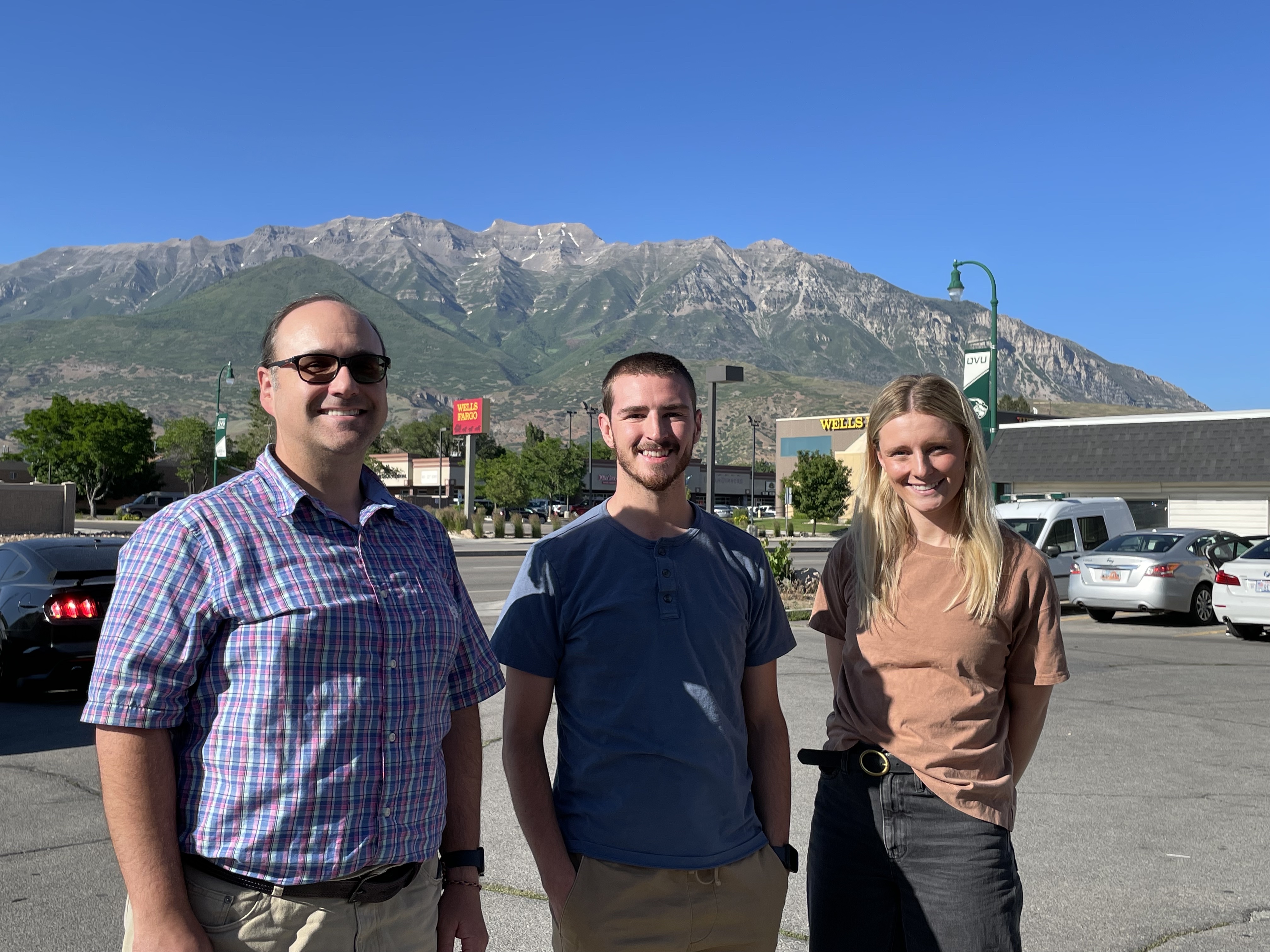
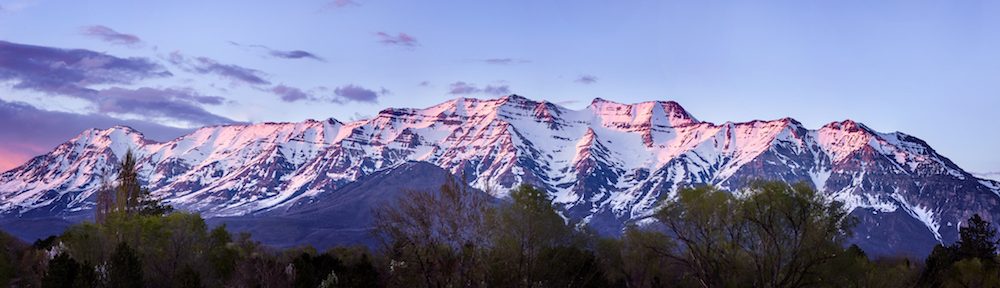
Here is our most recent group photo, taken on a perfect June evening outside Maria Bonita restaurant in Orem. The nearly snow-free Mt. Timpanogos lies in the background.

Our group’s first external grant!!!

Our group was recently selected to receive a small external grant from Organic Syntheses, Inc. Only 12 of these are given out each year, and many past award recipients are among the more well-known names in the field of synthetic organic chemistry at primarily undergraduate institutions (PUIs) in the United States. The Organic Syntheses, Inc. PUI faculty grant for research will fund our research efforts during Summer 2022 and Summer 2023. Specifically, it provides a $5,000 stipend each year to compensate a full-time undergraduate who will work under the title of Organic Syntheses Summer Scholar and money for supplies, reagents, and equipment. I have chosen UVU undergraduate Morgan Payne as the recipient of this fellowship for Summer 2022. He will be working on the preparation of halogenated derivatives of clavatadines A-E. Congratulations Morgan!

Clavatadine C, D, and E total synthesis paper submitted!

Congrats to Kylee Maxfield and Morgan Payne for their contributions to our recently completed research article, which we uploaded to the preprint server ChemRxiv (pronounced “Chem-ar-KIVE” at the following link:

Total Synthesis and Biological Evaluation of Clavatadines C-E

Although this version of the paper was not peer reviewed, we also submitted it to a reputable journal in the field to undergo peer review, and I’ll post an update once it gets published. By far, this was the longest paper I’ve written, and the first to include National Cancer Institute NCI-60 screening data on our synthesized compounds. All told, it was a herculean effort. Much credit goes to the students who devoted so much of their time in the lab and in the NMR instrument room to make it all happen. Thanks also to the sabbatical leave I was given this year, which enabled me to spend an enormous amount of time in the lab free of teaching duties.

2022 Spring Conferences

Kylee Maxfield and I drove down to St. George, Utah in late February to visit Dixie State University for the 2022 Utah Conference on Undergraduate Research. There, she presented a 15 minute talk on our group’s recently completed total synthesis of the natural products clavatadine C and clavatadine D. Quite a few UVU students attended as well, and contributed talks as well as poster presentations.

This was my first UCUR conference. I usually opt out of the local-level events in favor of the really impactful national meetings. This year, however, I started encouraging students to go to local meetings for the experience and when the timing enables them to use it as practice for a bigger meeting. An additional benefit of local meetings is the lower cost to attend for both faculty and students. We’ll definitely be participating at UCUR in future years.

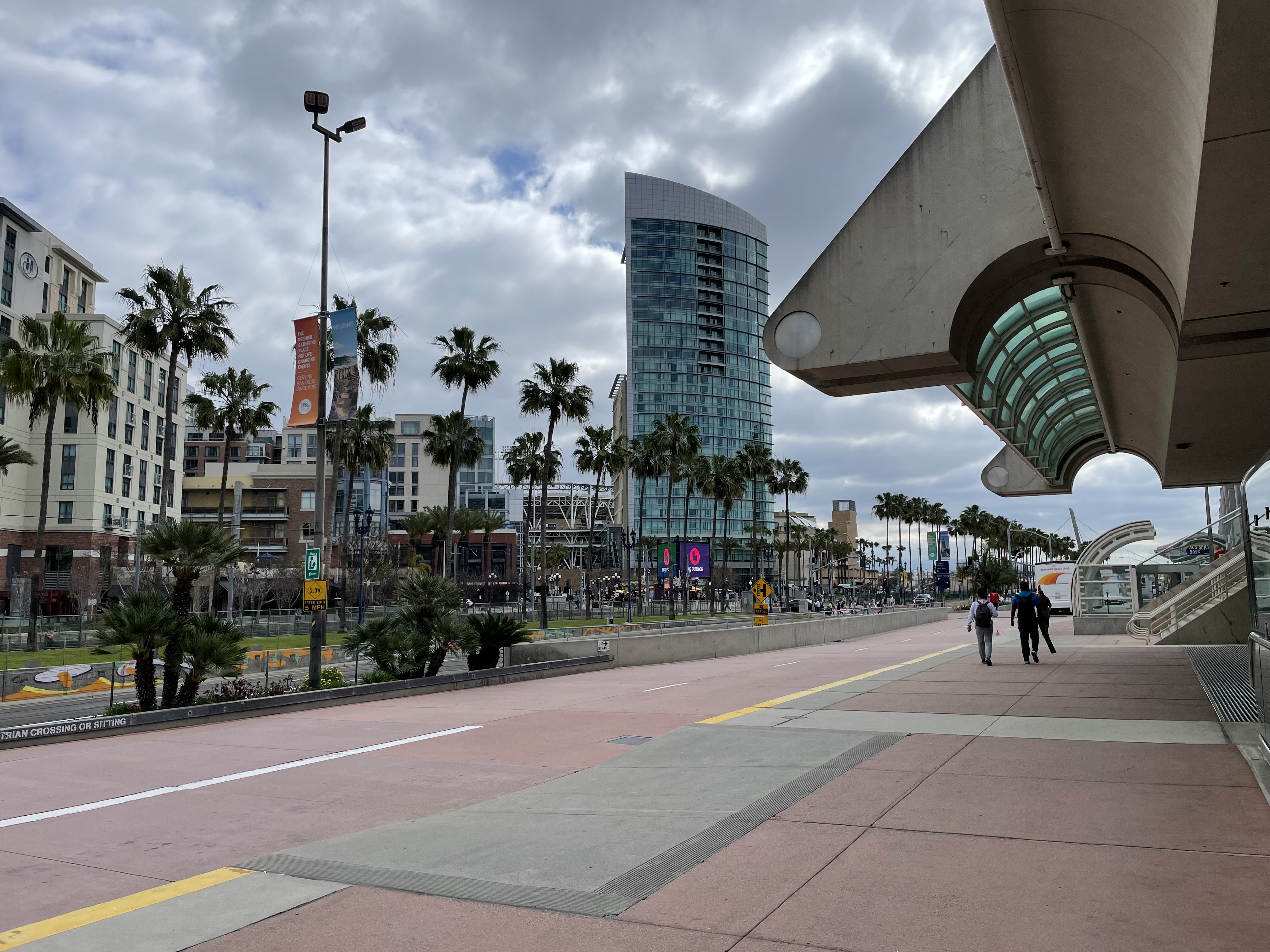
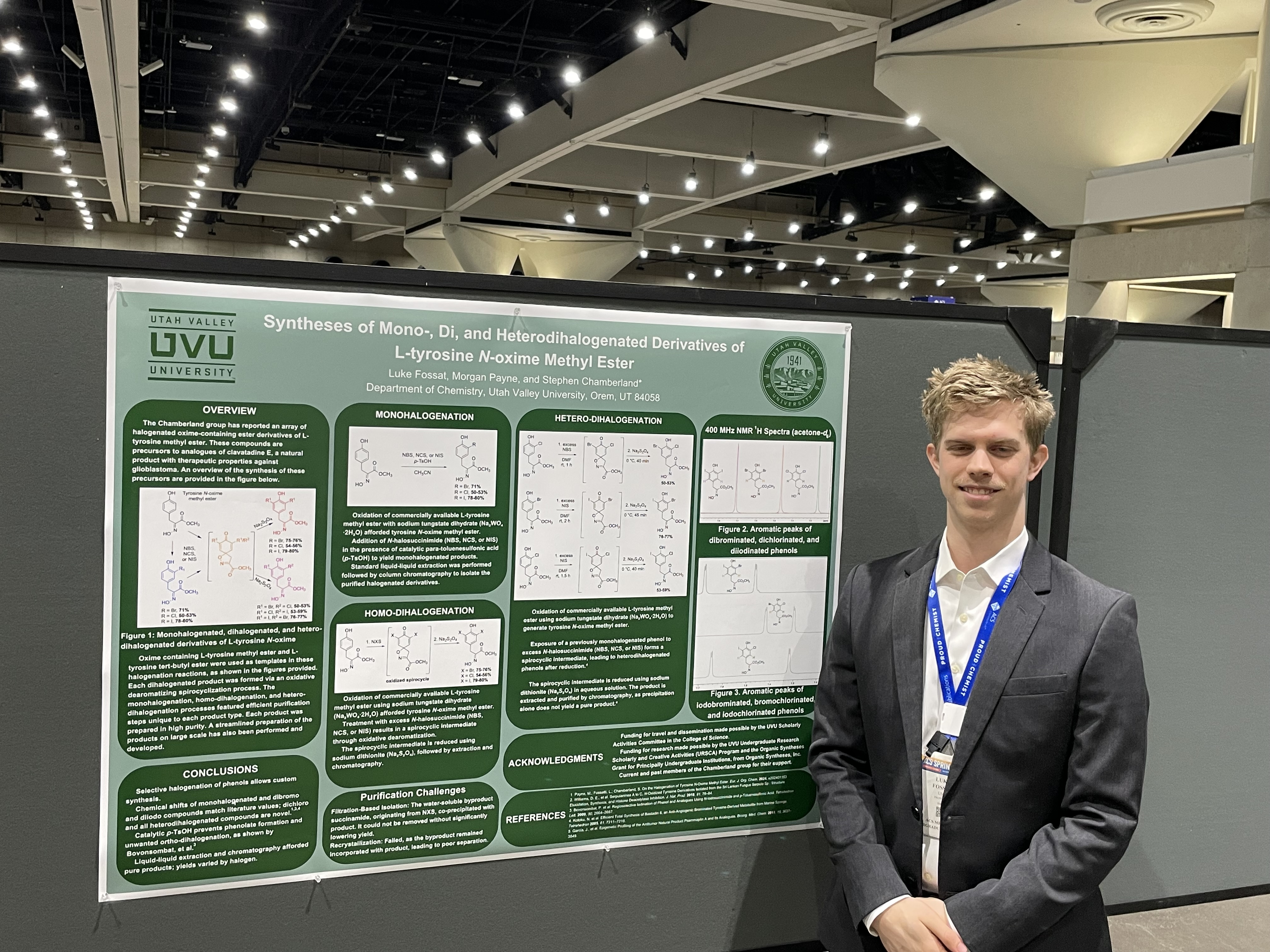
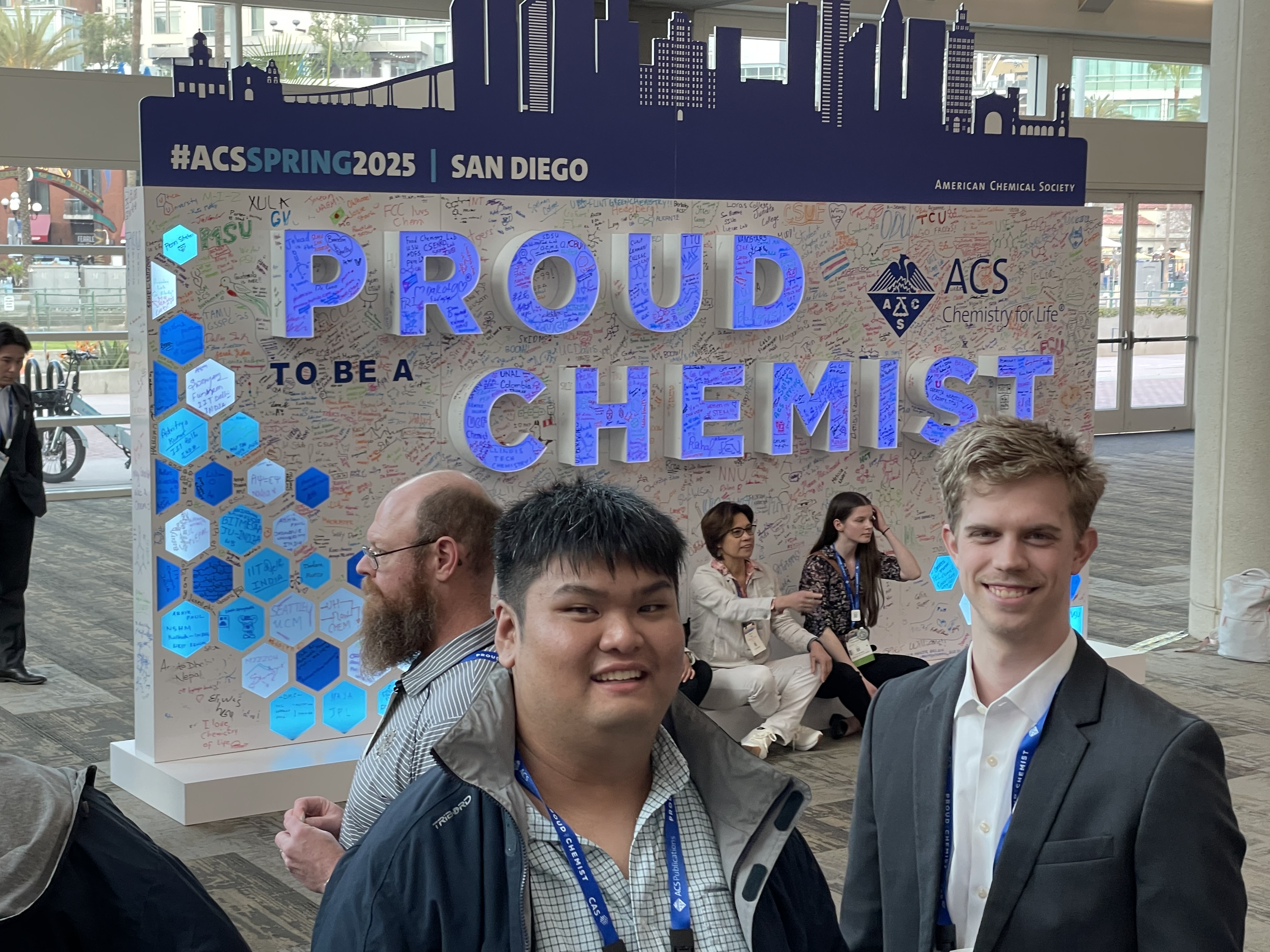
More recently, Kylee and I returned from San Diego where we ventured to the American Chemical Society spring national meeting. It is the first ACS meeting I’ve been able to attend in person since 2018, and Kylee’s first (and probably last). Kylee gave an updated version of the clavatadine C and D talk she gave at UCUR and added in our clavatadine E synthesis results as well. She was one of only two undergraduates in her session to present talks; both had recently graduated. Luckily, Kylee’s husband Brady was able to attend her talk too. Here’s a picture of us at dinner together. Although I’m grateful for the new wide-angle lens on the newer iPhones, the camera definitely adds more than 10 pounds near the edges. A photo of Kylee taken during her talk follows.

Pictured (l to r): Me, Sally Rocks, Michelle Chicas, Kylee Maxfield, Brady (Kylee’s husband), Clayton Rawson
UVU undergraduate Kylee Maxfield speaking at the 2022 Spring ACS meeting

Two other UVU chemistry students presented at the meeting, and UVU Chemistry faculty member Dr. Sally Rocks also travelled with us and presented a talk on our collaborative Structure Determination course for senior undergraduates.That has been a fun course to team teach with other UVU faculty. I teach three weeks of both the lab and lecture section. We focus on how to use 1-D and 2-D NMR spectroscopy to establish atom connectivity in small organic molecules. Another section highlights errors in structure determination and how to use computational (computer-based) methods to predict and confirm structure.

Finally, I gave two talks in person. The first was an invited lecture and panel discussion as part of the special Division of Organic Chemistry symposium titled “Successful Products and Models of Undergraduate-Based Research: Good Science, Better Scientists.” There, I had the opportunity to speak alongside two alumni from UC Irvine: Carolyn Anderson and Tim Clark. Tim and I were both in Keith Woerpel’s group. The second talk covered our group’s published total synthesis of clavatadine B from 2019. I’ve been trying to give this talk in person for two years, but ACS meetings since then were either cancelled or held virtually due to COVID.

Special thanks to the ACS Division of Organic Chemistry, who selected me to receive a $600 PUI Faculty Travel Grant to attend this meeting, and who sponsored the entirety of my travel costs as a result of my participation in the invited “Successful Products” symposium.

2021-22 Research Sabbatical Approved!

Yes, yes, I know, that in my 13th year of teaching I should be embarking on my second research sabbatical; however, the needless, surprising, and traumatic mid-career job change I experienced as my first sabbatical would begin postponed it until now. Thanks, but no thanks, Central Washington University Chemistry Department!

What’s weird at UVU is that research sabbaticals are not automatically approved and few people actually take them. Because the focus here so heavily emphasizes teaching, even qualified and correctly timed applications may not go forward if it would place too much of a teaching burden on their department. Fortunately, no one else in my department applied this year, yet I was not alone in being eligible.

Instead of taking a sabbatical “leave”, I’ll be staying at UVU. Now I’ll have time to work on my research projects in my shared lab space and might be able to mentor a few students too. Although I want to do an external sabbatical, I felt I should solidify my research position and complete and publish my current projects before working on someone else’s research agenda. I’ll admit, it’d be exciting to do a tandem teaching and research sabbatical with Neil Garg at UCLA, do some amazing synthesis work at Harvard (Myers, Jacobsen, Shair), Scripps (Baran, Yu, Shenvi), Caltech (Sarah Reisman), Cal (Richmond Sarpong), or Utah (Ryan Looper) to mention a few, or travel to Australia to do some deep-sea diving and natural product isolation/identification with Ronald Quinn, a research collaborator on our clavatadine A project. Another part of my sabbatical leave will allow me to dedicate time to create a chemistry-focused history/philosophy/political science course for the UVU Honors Program. Leading a small, honors-style course that focuses on reading, in-class discussions, and projects has been a dream of mine since I began teaching. Finally, I’ll hopefully be able to write manuscripts on a pedagogical research project I’ve been working on for a few years now and also a couple of articles describing some in-class activities and assignments that seem suitable for the Journal of Chemical Education.

Finally, looking forward to the future, I re-submitted the abstract that I planned to give at the Spring 2020 ACS meeting that was cancelled. The ACS announced that their Fall 2021 meeting in Atlanta will be in-person. As I prepared the abstract for submission, I believe I checked the box that said, “Present in person even if my division is only offering virtual presentations.” Now that I’m fully vaccinated, I’m ready to rejoin my community and declare a moratorium on my personal boycott of virtual meetings.

Will the COVID-19 pandemic impact our research?

The recently reported and growing epidemic known as COVID-19 sounds terrifying. We still know so little about the disease, such as how it’s transmitted, whether it’s airborne, how deadly it is, and the short- and long-term health effects of what seems like no normal cold virus. For now, because so much about the virus is uncertain and local universities are shutting down in-person activities, we’re taking the unprecedented step of halting in-person research. Thus, the progress we’ve made on the total synthesis of clavatadine C, D, and E will have to wait for a while. We hope to resume research in a month or so depending on how long the pandemic lasts. There’s talk about developing a vaccine, but that could take years. Are we in for a long, dark period of our lives, or will this all blow over in short order? Who knows?

Spring 2020 ACS Conference Cancelled!!!

Earlier, I posted that I’d been accepted to give an oral presentation at the 2020 Spring ACS meeting, but the ACS just made the (literally) unprecedented step of cancelling the meeting entirely with just one week remaining until it was scheduled to begin. I checked, and this is the first time the ACS has ever cancelled their national meeting. ACS meetings endured through World War I, World War II, but could not survive COVID-19. I’m sure I was not alone with the burden of having to cancel all air travel, hotel accommodations, and the like, but boy is this frustrating. It sounds like they’re also going to cancel the 2020 BCCE meeting to which I had submitted two abstracts. When will this end?!

For those in situations such as this, where we’ve had abstracts accepted but through no fault of our own the organizers decided to cancel the meeting, what do we do? Do we leave the items on our CV with a note that the conference was terminated? I think that sounds the most fair and is what I’ll do. But what do you think?